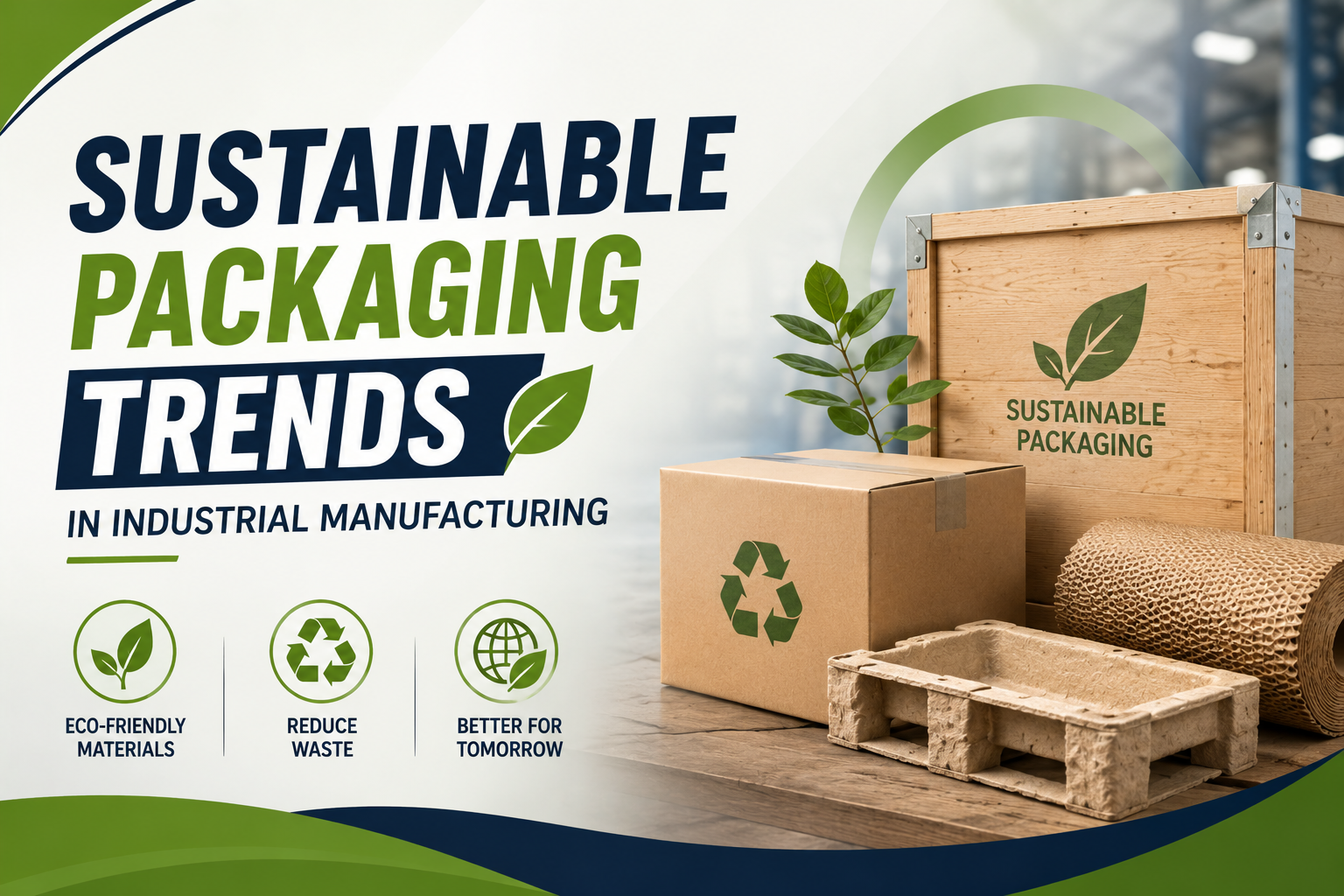
Sustainability in industrial packaging used to mean a trade-off against protection. That's changing — manufacturers are finding that lighter, reusable, and better-designed packaging often performs as well or better than the heavier defaults it replaces, while cutting material and freight cost.
Reusable and Returnable Pallets
For manufacturers with recurring shipping lanes — the same supplier-to-plant route repeated regularly — returnable pallet systems are replacing single-use wooden pallets. The pallets are built more robustly to survive multiple round trips, and while the upfront cost per unit is higher, the cost per shipment drops significantly once a pallet is reused a dozen or more times.
Right-Sizing Over Over-Packaging
A significant share of packaging waste comes from using one oversized standard crate for products of varying sizes, simply because it's easier to stock one crate size. Manufacturers designing crates closer to the actual product dimensions cut both material use and the void-fill material needed to stabilise a product rattling around in an oversized box.
Recyclable and Mono-Material Wraps
Stretch wrap and protective films built from a single recyclable polymer, rather than mixed-material laminates, are becoming easier to source and are simpler for the receiving facility to recycle rather than send to landfill. This shift is being driven as much by buyer requirements — especially in Europe — as by manufacturer preference.
Lighter Timber Engineering
Modern crate design increasingly uses engineered bracing and load calculations rather than simply adding thicker timber as a safety margin. The result is crates that use less wood while meeting the same load ratings, which reduces both material cost and the freight weight penalty on air and sea shipments.
What This Means for Buyers
If sustainability reporting matters to your business or your customers, ask your packaging supplier directly about reusable pallet programmes, recyclable wrap options, and right-sized crate designs for your regular shipments — most of these changes save cost on repeat shipments in addition to cutting material waste.


