
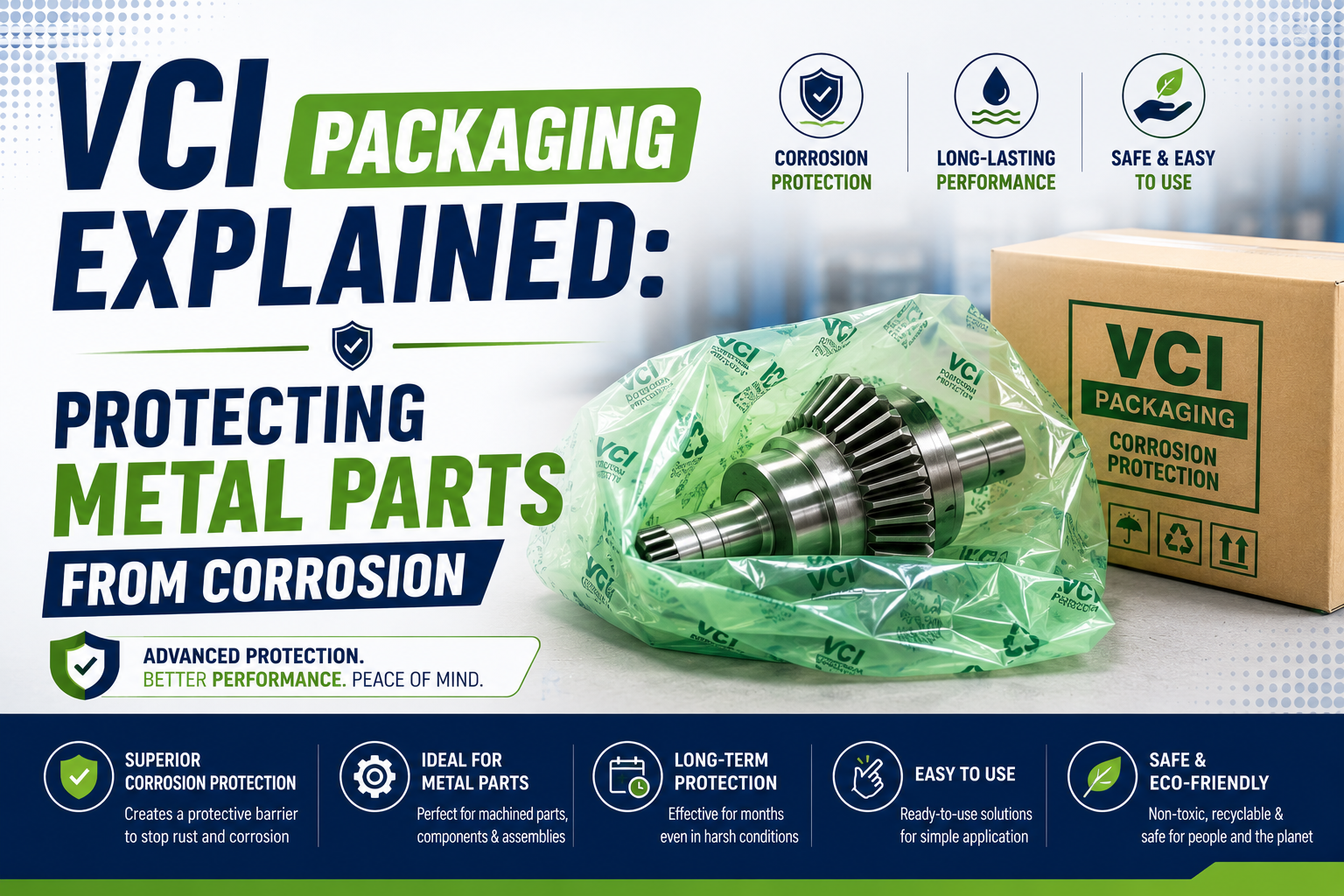
A metal component can pass every quality check on the shop floor and still arrive at the customer covered in rust. The cause is almost always the weeks it spends inside a container or warehouse, exposed to humidity swings it never saw during manufacturing. VCI packaging exists to close that gap.
How VCI Actually Works
VCI stands for Vapour Corrosion Inhibitor. The material — whether it's a film, paper, or foam — is impregnated with compounds that slowly vaporise inside a sealed package and form a microscopically thin protective layer on the metal surface. This layer blocks moisture and oxygen from reacting with the metal, without leaving any oily residue or requiring the part to be de-greased before use.
Where It's Used
- Precision-machined components and tooling being exported or stored long-term
- Automotive and engineering parts shipped in bulk
- Electronics with exposed metal contacts or housings
- Spare parts kept in inventory for extended periods before use
VCI Film vs VCI Paper
VCI film is typically used to wrap or bag components directly, and works well for irregular shapes since it can be heat-sealed around the part. VCI paper is interleaved between flat or stacked metal parts, like sheet metal or stamped components, where a wrap isn't practical. Both need the package to be reasonably sealed — VCI protection depends on the vapour staying concentrated inside a closed environment, so an open crate lined with VCI paper won't perform the same as a sealed VCI bag.
Getting the Combination Right
For high-value metal shipments, the reliable approach is layering: VCI film or paper directly against the metal, followed by a moisture-barrier bag, inside a crate with desiccant if the transit time is long. Skipping the VCI layer and relying on desiccant alone is a common mistake — desiccant manages humidity in the air, but it doesn't put a protective layer directly on the metal surface itself, which is where corrosion actually starts.


