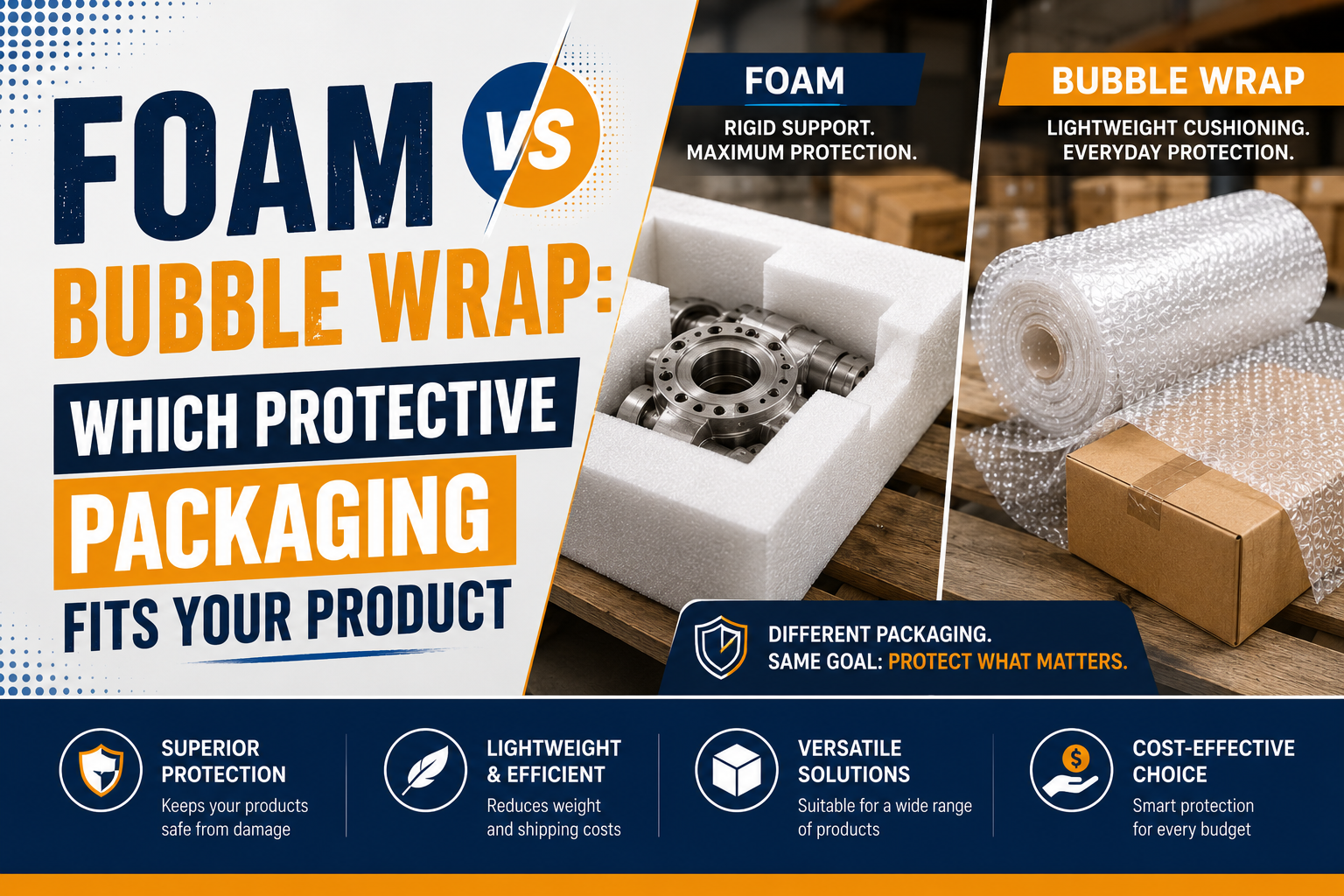
Cushioning material is often chosen by habit rather than by what the product actually needs. Bubble wrap gets reached for by default, but for industrial and export packaging, matching the material to the product's weight, shape, and fragility level makes a measurable difference to damage rates.
EPE Foam (Expanded Polyethylene)
EPE foam is a closed-cell foam that offers consistent, uniform cushioning across a surface. It's commonly die-cut into custom shapes that cradle a specific product — think electronics, appliances, or precision instruments packed in a moulded foam insert inside a carton. It's also moisture and chemical resistant, which makes it suitable for items that will sit in humid warehouse or port conditions.
EVA Foam
EVA foam is denser and more resilient than EPE, with better recovery after repeated compression. It's the better choice for items that need cushioning that holds up over a longer transit time or repeated handling, such as tool cases, optical equipment, or products that get packed and unpacked multiple times before final use.
Bubble Wrap
Bubble wrap is lightweight, flexible, and good for wrapping irregular shapes quickly, but it compresses under sustained weight and doesn't offer the same rigid protection as foam. It's well suited to lighter items, void-fill, or an extra wrap layer around a product that's already cushioned by its primary packaging — not as the sole protection for heavy or high-value industrial goods.
Making the Call for Export Shipments
For goods travelling by sea or over long distances, the real question isn't just 'what cushions the product' but 'what still cushions it after weeks of vibration and stacking pressure.' Foam holds its shape and resistance far longer than bubble wrap under sustained load, which is why most industrial exporters default to foam for anything beyond light, short-haul shipments, and reserve bubble wrap for filling gaps rather than bearing the main protective load.


