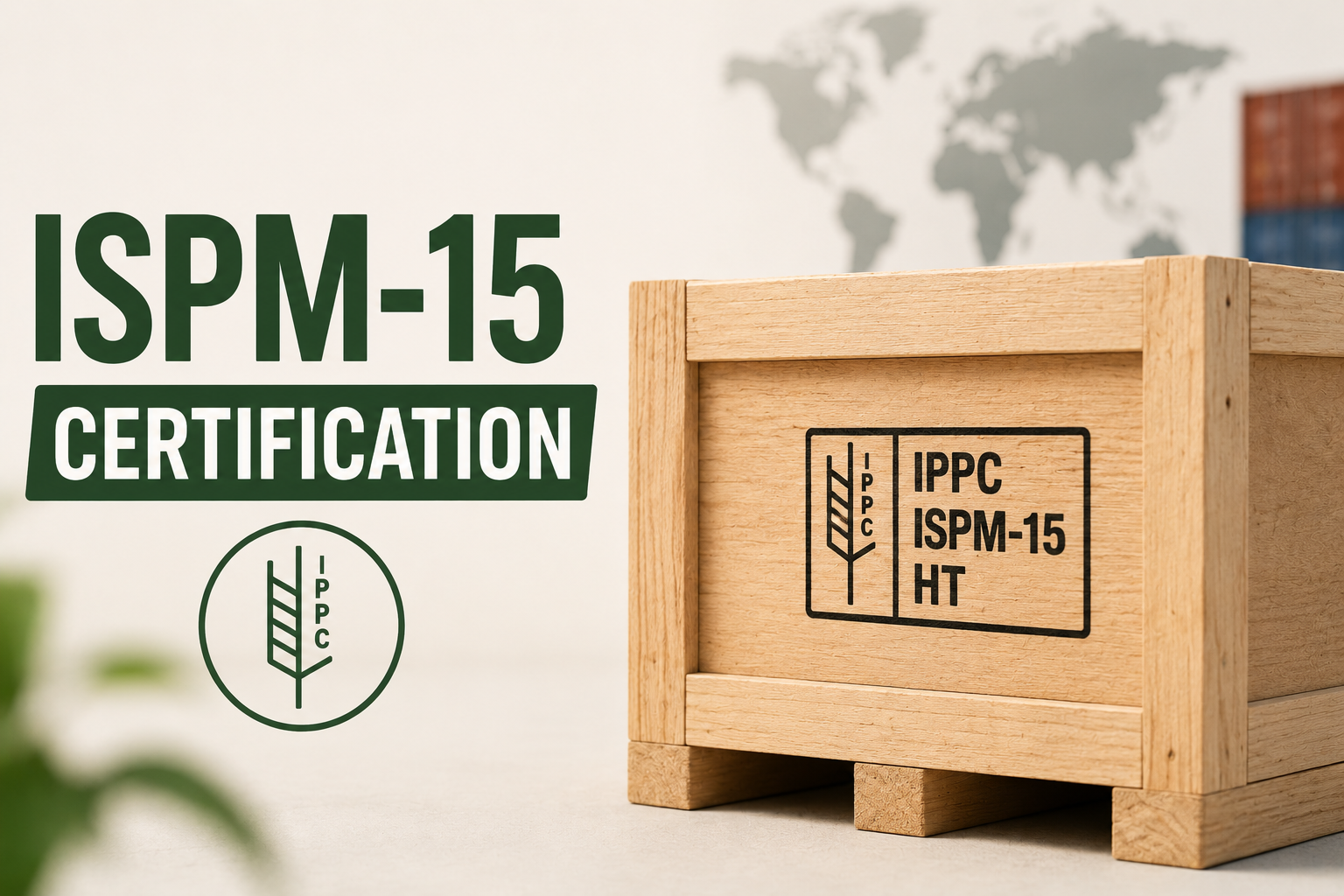
If you export using wooden crates, pallets, or dunnage, ISPM-15 is not optional paperwork — it's the difference between your shipment clearing customs on schedule and it sitting in a bonded warehouse while you pay demurrage. Most first-time exporters only learn this the hard way, after a container gets flagged at the port of entry.
What ISPM-15 Actually Is
ISPM-15 (International Standards for Phytosanitary Measures No. 15) is a global standard that governs solid wood packaging material used in international trade — pallets, crates, cases, drums, and dunnage. Its purpose is simple: stop wood-boring pests and diseases from hitching a ride in raw timber and spreading across borders. Countries that follow the standard, which includes almost every major trading nation, will not accept non-compliant wood packaging.
How Wood Packaging Gets Certified
Compliance comes down to two approved treatments, followed by an official stamp:
- Heat Treatment (HT): The wood core is heated to a minimum of 56°C for at least 30 continuous minutes, which kills insects and larvae without chemicals.
- Fumigation: Treatment with an approved fumigant, historically methyl bromide, though many countries are phasing this out in favour of heat treatment.
- Once treated, the packaging is stamped with the IPPC mark — a wheat-stalk logo with a country code, producer/treatment facility registration number, and the treatment code (HT or MB). This mark is what customs officials look for.
What Happens If You Skip It
Non-compliant wood packaging discovered at the destination port is usually dealt with in one of three ways: the wood packaging is treated on the spot at the importer's cost, it's re-exported back to origin, or in the worst case, it's destroyed along with delays to the rest of the shipment. All three outcomes cost far more than getting the certification right the first time, and they damage trust with your buyer.
How to Make Sure You're Covered
The easiest way to stay compliant is to source your pallets and crates from a supplier who is a registered ISPM-15 treatment provider and can show you their certification number on request. Ask your packaging partner for:
- A copy of their treatment facility registration
- The IPPC stamp clearly visible on every unit, not just a sample piece
- A treatment certificate you can hand to your freight forwarder or customs broker if asked
At Akrish Industries, every wooden pallet and crate we manufacture for export shipments is heat-treated and IPPC-stamped as standard, so you're not scrambling to arrange compliance at the last minute before a container closes.


